
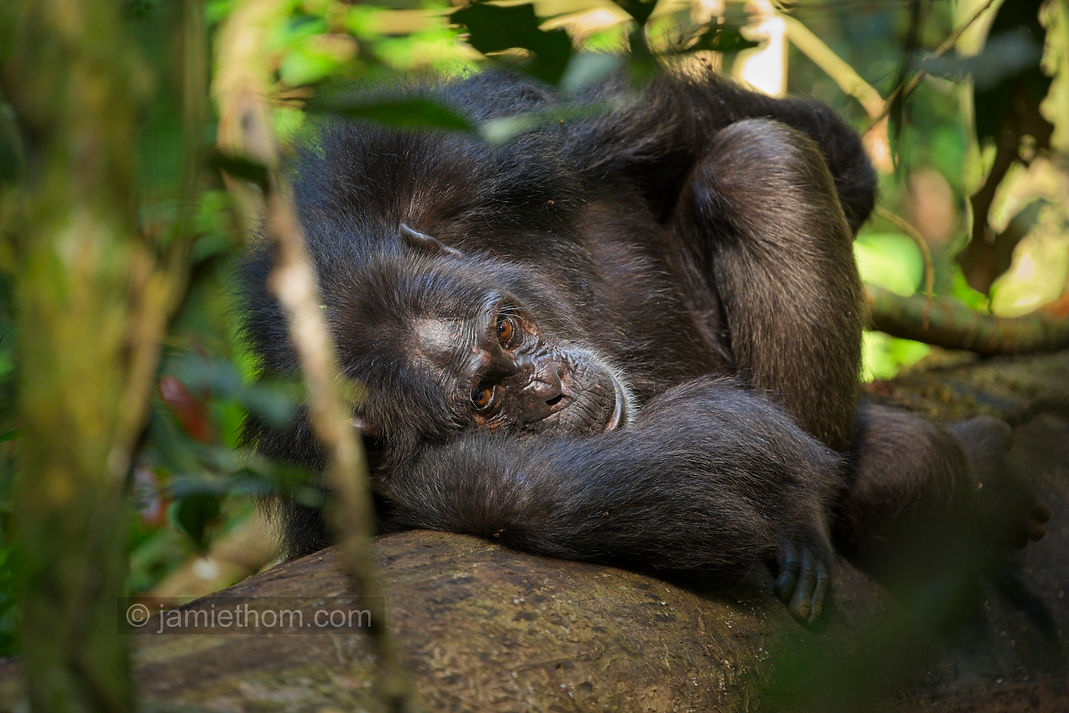
CHIMP TRACKING
EXPLAINED - WHERE AND HOW
CHIMPANZEE TRACKING OFFERS ONE OF AFRICA’S MOST INTIMATE AND THOUGHT-PROVOKING WILDLIFE ENCOUNTERS. UNLIKE THE DRAMA OF A PREDATOR SIGHTING, TIME SPENT WITH CHIMPS FEELS DEEPLY PERSONAL. AS OUR CLOSEST LIVING RELATIVES, SHARING NEARLY 98–99% OF OUR DNA, THEIR BEHAVIOUR IS STRIKINGLY FAMILIAR—WHETHER IT’S THE TENDERNESS OF A MOTHER WITH HER INFANT, THE DYNAMICS OF SOCIAL GROOMING, OR THE ENERGY OF A GROUP MOVING NOISILY THROUGH THE FOREST CANOPY. IT IS AN EXPERIENCE THAT FEELS LESS LIKE OBSERVATION AND MORE LIKE CONNECTION.
CHIMP GROUPS RANGE FROM 20 - 150 INDIVIDUALS BUT ARE SELDOM ALL TOGETHER
Trekking takes place in the forests of East Africa, most notably in Uganda, Rwanda and western Tanzania. Guided by expert trackers, you follow the sounds and signs of a habituated chimpanzee community through dense rainforest. The search can take anywhere from one to several hours, as chimpanzees are highly mobile, ranging widely in search of fruit and other food sources. This sense of movement and unpredictability makes the experience especially engaging. Once located, you spend a strictly regulated hour with the group, observing their interactions at close range.
Uganda’s Kibale Forest is widely regarded as the premier destination, known for its high chimp density and excellent tracking success, while Rwanda’s Nyungwe Forest and Tanzania’s Mahale Mountains offer equally immersive but more remote experiences. The best time to visit is during the drier months, from June to October and January to February, when trails are more accessible and visibility is clearer.
Kibale Trekking Details
-
Times of Day: Morning treks begin at 8:00 AM and afternoon treks start at 2:00 PM. Both sessions start with a mandatory briefing by park rangers.
-
Permit Limits: Daily entries are highly restricted to protect the primates. Tracking groups hold a maximum of 6 to 8 visitors, with about 32 total people allowed in the park at a time. [
-
Permit Cost: A standard chimpanzee trekking permit currently costs $250 USD per person.
-
The Experience: Rangers and trackers locate the chimp families early in the morning before leading you through relatively flat but occasionally muddy or dense forest terrain. Once you find them, you spend 60 minutes quietly observing them from an 8 to 10 meter distance.
-
Habituation Experience: For a deeper encounter, the Chimpanzee Habituation Experience (CHEX) is available. Starting at 6:30 AM, this full-day trek costs $300 USD and lets you spend up to 4 hours following researchers as they get a chimp community used to human presence.
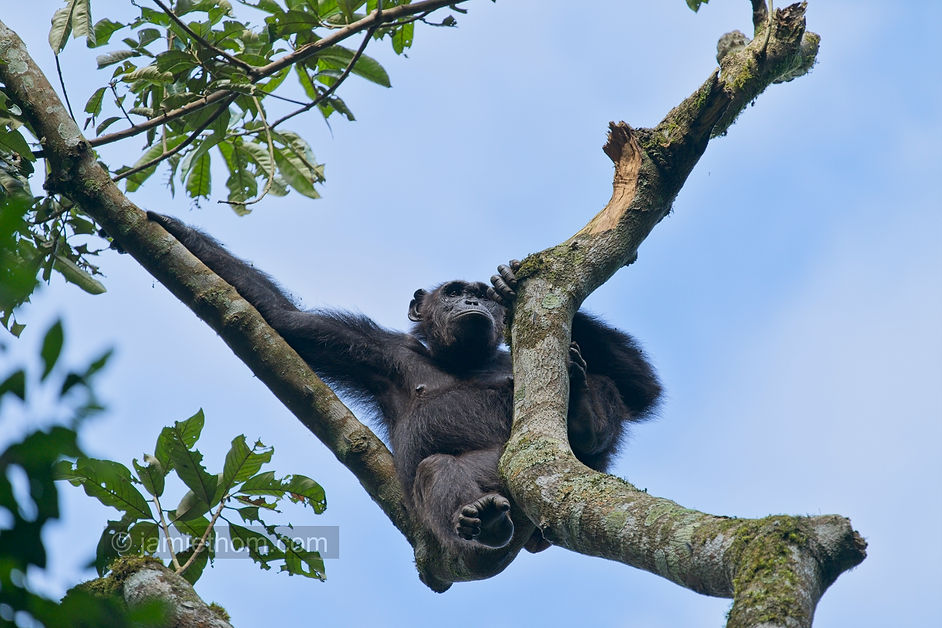
MY TIME WITH THE CHIMPS WAS FASCINATING, WE MOVED WITH THEM AND SAW THEM ENGAGING IN VARIOUS ACTIVTIES, FROM PLAY TO FEEDING, SQUABBLING AND GROOMING - PHOTOGRAPHY WAS VERY REWARDING.
Chimpanzee trekking can be physically more demanding than gorilla trekking, but equally rewarding. The forests themselves are rich ecosystems, alive with other primates, birds and forest wildlife, adding depth to the experience. For those wanting a deeper insight, habituation experiences are available in certain areas, allowing extended time with semi-habituated groups and a greater understanding of their behaviour and social structure.
Chimp permit prices vary based on popularity and stature of the park, in Uganda, Kibale is $250 pp whereas Kyambura is $100 pp, in Rwanda's Nyungwe it is $150 pp and in Tanzania, Gombe is $100 and Mahale is $150 pp.
Strict guidelines are in place to protect the chimps, who are highly susceptible to human diseases. Trekking is limited to small groups, a minimum age of 15 applies, and visitors must wear masks and maintain a safe distance at all times. These measures, along with permit fees, play a vital role in conservation, directly supporting chimpanzee protection and the preservation of their forest habitats.
For many travellers, chimp trekking becomes a highlight of their safari—an encounter that is not only exciting, but profoundly moving, offering a rare glimpse into a world that feels, in many ways, remarkably close to our own.


Chimpanzees are among our closest living relatives, sharing up to 99% of human DNA, and are found across the forests and woodlands of western and central Africa. They live in social groups, or troops, typically numbering around 35 individuals, though some communities can be much larger. Highly adaptable, chimpanzees inhabit a range of environments from dense primary forests to secondary growth and even farmland edges.
Omnivorous and intelligent, chimpanzees have a varied diet that includes fruit, leaves, seeds, insects and small mammals. They are the most carnivorous of the great apes after humans and are known to hunt cooperatively. Their intelligence is further demonstrated through their use of tools, such as sticks to extract insects or stones to crack nuts, as well as their complex communication methods.
Chimpanzees have relatively slow reproductive cycles, with females giving birth to a single infant every four to six years after a gestation period of around eight months. Young chimpanzees remain dependent on their mothers for several years, and individuals can live into their 40s in the wild. There are two species within the genus Pan: the common chimpanzee and the bonobo, with several subspecies of chimpanzee distributed across Africa.
Despite their adaptability, chimpanzees are classified as Endangered, with populations estimated between 170,000 and 300,000 individuals and declining. Major threats include habitat loss due to agriculture, logging and infrastructure development, as well as poaching for bushmeat and the illegal wildlife trade. Disease, particularly those transmitted from humans, also poses a significant risk.
Conservation efforts are ongoing across their range, but challenges remain due to increasing human populations, habitat fragmentation and limited enforcement of wildlife protection laws. Protecting chimpanzees is not only vital for biodiversity but also for preserving one of humanity’s closest connections in the natural world.
READ MORE ABOUT CHIMPS AND GORILLAS HERE

