

NGORONGORO CRATER
NGORONGORO CONSERVATION AREA >

FEW PLACES IN AFRICA HAVE BEEN AS VISUALLY AND EMOTIONALLY IMPRINTED ON THE GLOBAL IMAGINATION AS THE NGORONGORO CRATER. MADE FAMOUS THROUGH DECADES OF WILDLIFE DOCUMENTARIES, THIS VAST NATURAL BOWL IN NORTHERN TANZANIA HAS BECOME SHORTHAND FOR THE IDEA OF A PERFECT SAFARI—DENSE WILDLIFE, DRAMATIC SCENERY, AND AN ALMOST SURREAL SENSE OF CONTAINMENT.
AFRICA'S
WILDLIFE
AMPHITHEATRE
The crater is large enough to contain an entire ecosystem—often described as a natural “Garden of Eden”—with around 25,000 large animals living within its confines. When you reach the crest of crater the rim and stand at the first viewpoint, binoculars in hand, you can spot hundreds of animals like ants below, and you are effectively looking into a complete, self-contained wildlife system spread out beneath you like a living map.


THE NGORONGORO CRATER IS THE WORLD’S LARGEST INTACT, UNFILLED VOLCANIC CALDERA, FORMED AROUND 2–3 MILLION YEARS AGO WHEN A MASSIVE VOLCANO COLLAPSED IN ON ITSELF.
TODAY, IT MEASURES ROUGHLY 18 KM ACROSS WITH A FLOOR OF ABOUT 260–264 KM², AND ITS WALLS RISE SOME 600 METRES FROM THE BASIN FLOORS.
What makes Ngorongoro exceptional is not just its scale, but its ecological completeness and diversity. The crater floor includes open grasslands, swamps, acacia woodlands and soda lakes—most notably Lake Magadi, a shimmering alkaline lake that attracts flamingos and other waterbirds. The shallow lake and high crater rim often provide the backdrop for wonderful photographs.
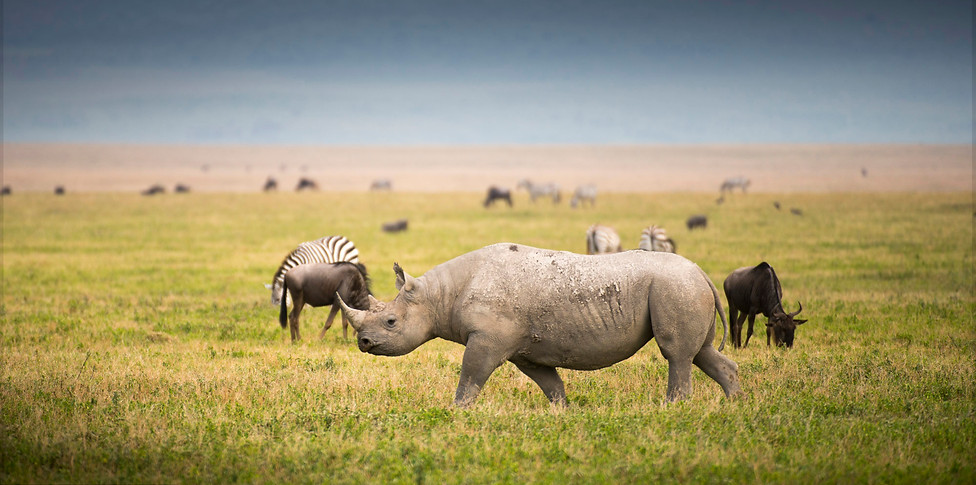
This diversity of habitats allows for an extraordinary density of wildlife. The crater supports the Big Five, with one of the highest concentrations of predators in Africa, particularly lions. It is also one of the few places in East Africa where you still have a realistic chance of seeing the critically endangered black rhino in the wild. The population is small—approximately 20 to 30 individuals—these rhinos are closely protected through anti-poaching patrols, aerial surveillance, and constant tracking. Their presence is a major highlight of any visit and a testament to long-term conservation success. They are most often seen first thing in the morning, after feeding for the night, before the noisy vehicles fill up the crater and, to some degree, harass the rhino before they disappear into the forested zones.
The crater’s lion population is famous—both for its size and its genetic story. With an estimated 60–80 lions living within the crater , they benefit from abundant prey and relatively stable conditions. However, the steep crater walls and the presence of villages around the rim and areas outside of the crater limit movement in and out, leading to genetic isolation. This has historically resulted in inbreeding concerns, although occasional movement of males between the crater and surrounding areas helps maintain some genetic flow. I have seen some of the biggest male lions with the most impressive manes in the crater.
Birding is equally rewarding, with hundreds of species recorded, ranging from raptors on the rim to waterbirds and migratory species on the crater floor.
Most visitors approach Ngorongoro from the town of Karatu. After entering the protected area, you travel along a windy and busy access road that climbs steadily into the highlands. The road is full of safari vehicles and supply trucks and much of the traffic that is going on to the Serengeti. The final stretch to the rim can be slow, particularly in peak season.
There are two main routes into the crater:
After paying crater entry fees, the main descent road on the southern side is steep and dramatic, used by most vehicles. A southern ascent road is paved and only used for exiting the crater on the southern side.
The north eastern entry and exit road is a lot quieter because the main thoroughfare is on the southern side which goes on to the Serengeti.
A
REALISTIC
CHANCE OF SEEING
BLACK RHINO
Ngorongoro is one of Tanzania’s most expensive conservation areas. Fees typically include; Conservation area entry fees and camping fees, if you are staying at a lodge for the night, are currently $72 and $60 respectively (per person, per day) and then each vehicle is charged a Crater descent fee of $295, which is primarily there to limit access and prevent overcrowding - not that it really works! Those rates are often bundled into a total quote when we plan a Tanzania safari so most folks are not aware of it, and of course if there are more folks in a vehicle the cost is shared.
Most travellers visit Ngorongoro as a one-night stop, with a half- or full-day game drive into the crater. A full day allows for a more relaxed experience, including time at Lake Magadi and the Lerai Forest.

PEOPLE AND
LANDSCAPES ARE
ENTERTWINED
Unlike most national parks, the Ngorongoro Conservation Area is a multiple-use landscape, where wildlife coexists with people. The Maasai have lived here for centuries, and today around 30,000 Maasai pastoralists inhabit the wider conservation area.
Cattle are occasionally seen grazing within the crater, although access is now controlled. This coexistence is central to Ngorongoro’s identity, but it also creates ongoing tension between conservation, tourism, and traditional livelihoods.
DESPITE THE CRATER BEING SO FAMOUS AND POPULAR, WE OFTEN DEBATE WHETHER IT IS WORTH VISITING THE CRATER, GIVEN THAT THERE CAN BE SOME VERY BUSY, SLOW AND DUSTY TIMES AND SERIOUS OVER-CROWDING AROUND LION SIGHTINGS.
The moment a few vehicles stop and gather anywhere, they are easily seen across the relatively small and flat area, and the rest of the vehicles race over there to get a view as well! Professional guides however know to avoid this, and with some explaining to guests they will explore the many other exciting areas of the crater.
Visiting the crater is usually part of a longer safari itinerary in northern Tanzania that might include Tarangire NP, Lake Manyara NP and almost always the Serengeti NP which is further north and west of the crater. There are a number of lodges, guest houses and resorts in the town of Karatu that make day trips into the crater - which is what contributes to the congestion, and then there are lodges on the crater rim and just outside it. If you stay in the protected area around the crater, you do have an advantage in getting to the entry gate early, and especially from the less populated northern side, you can often have the first hour or two and last hours of the day in magnificent silence.
You can also fly-in to the crater, landing at Manyara Airstrip near Karatu and then being transferred for 90 minutes to your accommodation, you would then need to return to Manyara airstrip to fly on - quite a lot of driving involved on bumpy roads.
In addition to game drives you can experience Maasai culture by visiting one of their villages and also take a guided walk on the crater rim with park rangers - needs to be arranged in advance.
The crater and rim are 2,200 to 2,400 metres (7,200 to 7,900 feet) above sea level - so it is relatively cool and often misty and moody in and around the crater. At night it gets cold so many lodges have fireplaces in central areas and also in the rooms. Here is a selection of lodges that we have used over the years from down-to-earth to over-the-top luxury and expensive.

STAY HERE


