
A Day in Nairobi - What to do and what it costs.
Nairobi is much more than a gateway to safari, and a day exploring the city’s southern suburbs around Lang’ata and Karen can make a very worthwhile addition to a Kenya itinerary. The area combines wildlife conservation, Kenyan history, art and shopping, with several of the attractions close enough together to create a full and varied day.
A typical day might begin at the Giraffe Centre, followed by the 11am visit to the Sheldrick Wildlife Trust’s elephant nursery. After lunch in Karen, continue to the Karen Blixen Museum and Matbronze Wildlife Art before finishing with some local craft shopping. It is an interesting combination, although we would not recommend trying to rush through every attraction simply to tick them off. Nairobi traffic can be unpredictable, and a more relaxed day generally makes for a much better experience.
Giraffe Centre
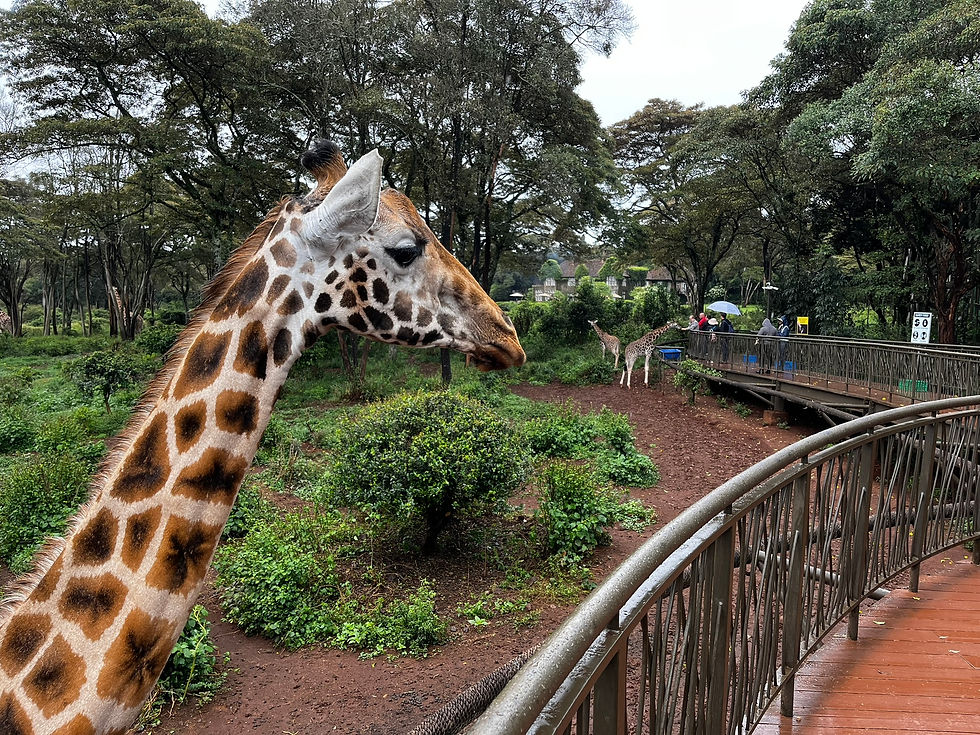
The Giraffe Centre is one of Nairobi’s most popular attractions and gives visitors the opportunity to get remarkably close to endangered Rothschild’s giraffes. From the raised viewing platform, guests can feed the giraffes and watch them at eye level, followed by a short educational talk and, if time allows, a walk through the nature area.
The centre is open daily from 9am to 5pm. International visitors currently pay approximately US$12 per adult and US$6 per child, with children under three free. The centre recommends allowing around 1½ to 2 hours for a visit.
This is particularly good for families and younger children and is one of those experiences that photographs extremely well. The downside is that it can feel busy and quite touristy, particularly around the middle of the day. It is also not a substitute for seeing giraffes in the wild. For clients staying at Giraffe Manor, we would normally leave the Giraffe Centre out altogether, as they will already have had a much more intimate giraffe experience.
Sheldrick Wildlife Trust
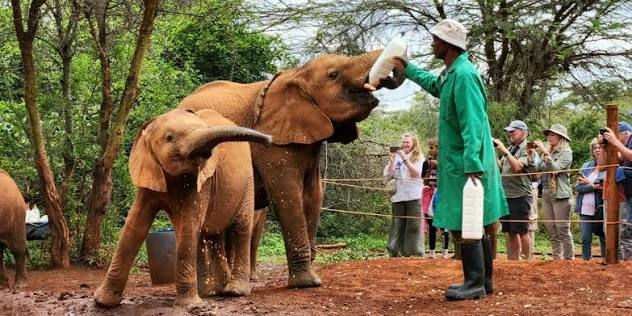
The Sheldrick Wildlife Trust is, in our view, the most worthwhile conservation experience of the day. The Nairobi Nursery cares for orphaned elephants rescued from across Kenya, and the public visit takes place strictly between 11am and noon. Guests watch the young elephants being fed and cared for while the keepers explain their individual stories and the Trust’s rehabilitation programme.
The minimum donation for the public visit is currently US$20 per adult and US$5 per child under 12. Importantly, visitors must now also pay the Nairobi National Park entrance fee, currently US$80 per adult and US$40 per child, making the effective cost considerably higher than the nursery donation alone.
This additional park fee is worth considering when planning the day. If clients are already paying to enter Nairobi National Park, we would strongly suggest adding a game drive either before or after the elephant nursery visit rather than simply using the park as a route to the Trust.
The elephant experience itself is excellent. The conservation message is strong, the keepers are knowledgeable and seeing the young elephants interacting with one another is genuinely memorable. The downside is that the public visit lasts only an hour and has become relatively expensive once the park fee is included. It is also essential to book ahead; same-day bookings are not accepted and the Trust has limited daily capacity.
Lunch in Karen
After the elephant nursery, we recommend stopping for lunch in Karen rather than trying to squeeze another attraction immediately into the schedule. There are a number of good cafés and restaurants in the area, and lunch provides a useful break from what can otherwise become a fairly busy sightseeing day.
Matbronze is also an option for a relaxed lunch, with its restaurant set amongst its wildlife sculpture gardens.
Karen Blixen Museum
The Karen Blixen Museum is the former home of Danish author Karen Blixen, whose book Out of Africa and the subsequent film helped make this part of Kenya famous around the world. The house, gardens and surrounding grounds provide an interesting glimpse into Kenya during the early twentieth century, while guides offer additional context about Blixen’s life and the farm she ran at the foot of the Ngong Hills.
The current international admission price is US$17 per adult and US$8 per child, following the National Museums of Kenya’s revised 2026 tariffs.
The museum is particularly worthwhile for anyone who has read Out of Africa, seen the film or has an interest in Kenya’s history. The house itself is not enormous, however, so this is not an attraction we would recommend simply because there is a spare hour in the itinerary. For visitors with little interest in Blixen or colonial history, the Giraffe Centre and Sheldrick Wildlife Trust are likely to be more engaging.
Matbronze Wildlife Art
Matbronze is a very different experience and one we particularly like for clients who are interested in wildlife, photography or African art. Established in 1987, it combines a wildlife art gallery, bronze foundry and restaurant, with sculptures displayed throughout the gardens. The work ranges from small and relatively affordable pieces to substantial wildlife sculptures and bespoke commissions.
There is no general admission charge for visiting the gallery and sculpture gardens, although obviously artwork purchased is priced separately. Smaller pieces and gifts can be relatively accessible, while larger bronze sculptures can run into several hundred or thousands of US dollars. For example, some of the smaller wildlife pieces currently sell for around US$30–70, while larger sculptures are considerably more expensive.
Matbronze is a more relaxed stop than some of Nairobi’s larger tourist attractions and works particularly well for couples and adults. It is less compelling for younger children unless they have an interest in wildlife or sculpture, and we would allow around 30–60 minutes rather than building the whole afternoon around it.
Craft Shopping
A final stop at one of Nairobi’s craft markets can be a good way to finish the day. Visitors will find colourful textiles, baskets, beadwork, jewellery, carvings, paintings and other souvenirs. The traditional Maasai markets are more informal and involve bargaining, while established artisan shops provide a more relaxed shopping experience and generally make more sense for clients who don't enjoy negotiating over prices.
The quality varies considerably in the markets and some items are fairly generic and can be found elsewhere in East Africa. For that reason, we prefer to guide clients towards particular artisans or shops according to what they are looking for rather than automatically including a market in every itinerary.
What Does the Day Cost?
For an international adult, the principal entrance costs for all four ticketed attractions are approximately US$129 per person before transport and lunch: around US$12 for the Giraffe Centre, US$20 for the Sheldrick Wildlife Trust nursery donation, US$80 for Nairobi National Park and US$17 for the Karen Blixen Museum.
Matbronze itself does not require an admission ticket, while craft shopping obviously depends on what clients choose to purchase.
For children, the equivalent admission costs are approximately US$49 per child, based on the current Giraffe Centre, Sheldrick, Nairobi National Park and Karen Blixen rates. Children under three are free at the Giraffe Centre.
These figures are entrance costs only and do not include a private vehicle and guide, lunch, drinks or any shopping. Expect to pay around $300 for a qualified guide and a private vehicle for the day. For a safari itinerary, we would normally package the day with a private vehicle and guide rather than expecting clients to arrange individual transfers between the attractions.
Which Experiences Would We Recommend?
For families with children, the Giraffe Centre and Sheldrick Wildlife Trust are the obvious highlights. Feeding the giraffes is interactive and fun, while the young elephants provide a memorable conservation experience. Karen Blixen can be added for older children and teenagers, particularly if they have seen Out of Africa or are interested in history. Matbronze is better treated as an optional stop.
For couples, we would make the day slightly less activity-heavy. Sheldrick followed by a good lunch in Karen, Karen Blixen and Matbronze makes a more relaxed combination. Couples interested in photography, art or shopping may prefer to spend more time at Matbronze and selected artisan shops rather than visiting every attraction.
For first-time visitors to Kenya, Sheldrick is probably the one experience we would prioritise, followed by the Giraffe Centre. If time allows, add Karen Blixen for some historical context and Matbronze or craft shopping according to personal interests. If the Sheldrick visit means paying the Nairobi National Park fee anyway, we would seriously consider adding a short game drive in Nairobi National Park. The park is home to rhino, lion, buffalo, giraffe, zebra and more than 400 bird species, remarkably close to the city centre.
Our preferred version of the day would therefore be Giraffe Centre in the morning, Sheldrick at 11am, lunch in Karen, followed by Karen Blixen or Matbronze and some carefully selected shopping. We would not try to force all five experiences into a rigid timetable. Nairobi is a busy city, and allowing some flexibility for traffic and lunch makes the day considerably more enjoyable.
For clients who have already had several days of safari, we would also question whether they need another wildlife attraction. In that case, the historical and cultural side of Karen — Blixen, Matbronze, local artisans and a good lunch — can provide a welcome change of pace before heading home.


Comments